


A speculative political fiction (or an idea?) set in India.
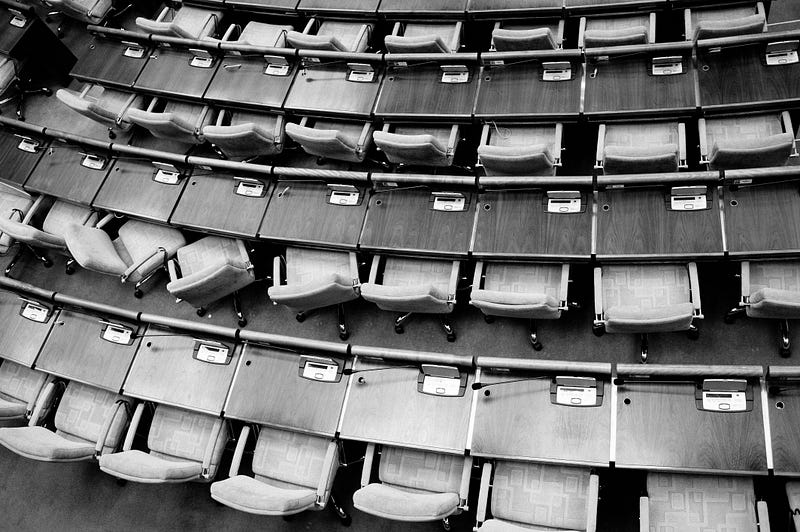
Let’s first hear a story in 5 short tales.
I. The Silence
It did not begin with tanks. It began with applause.
The last election in India ended not with celebration, but exhaustion. Voter turnout was record high. So was public anger. Debates had become theatre. Parliament had become noise. Intellectuals wrote columns no one read. Economists warned. Scientists pleaded. Generals waited.
The morning after the results, markets crashed. Not because of who won but because nothing would change.
The day after the day, the Constitution was “paused.”
No blood. No riot. Just a notification.
II. The Doctrine of Competence
The new order did not call itself a coup. It called itself a correction.A council was formed. Not elected. Selected.
Physicists. Military strategists. Infrastructure engineers. Constitutional scholars. Behavioral economists. Data architects. The argument was clean: complex civilizations require competence, not popularity. Airplanes are not flown by majority vote. Nuclear reactors are not managed by emotional rhetoric. Why should a billion lives be governed by slogans?
Religion was declared a private artifact, stripped of public authority. No sermons in policy. No scripture in curriculum. No mass mobilization in the name of transcendence.
The armed forces were granted operational autonomy, internal and external. Borders hardened. Surveillance expanded. Dissent was reclassified as destabilization.
Productivity rose. Crime fell. Infrastructure accelerated. Bullet trains expanded beyond corridors once debated for decades. River-linking projects executed in months. Artificial intelligence embedded into public administration. Efficiency replaced persuasion.
The headlines were simple: “It works.”
III. The Cost of Order
But something invisible eroded.
Democracy is inefficient because it is human. It absorbs disagreement. It tolerates incompetence. It wastes time arguing. It allows fools to speak. It protects the wrong person sometimes.
The new regime removed that friction.
Universities became merit citadels, but debate narrowed. Journalism became technical reporting, but lost moral interrogation. Elections became performance audits, but lost emotional legitimacy.
Religious prohibition removed sectarian riots. It also removed public ritual. Temples became museums. Mosques became silent architecture. Churches became archives.
People were safer.
They were also quieter.
The paradox surfaced slowly: a system optimized for intelligence began to distrust imagination. Intellectual rule hardened into technocracy. Technocracy hardened into orthodoxy. Orthodoxy hardened into control.
The military, unrestricted, solved problems decisively. It also began defining what a “problem” was.
IV. The Psychological Fracture
In old democracies, outrage diffuses through protest, speech, satire. In this new India, dissent had no outlet. It did not disappear. It compressed.
The youth, hyper-educated, hyper-surveilled, began writing anonymous manifestos on encrypted networks. Not for religion. Not for populism. But for voice.
The irony became unbearable: a nation once chaotic but alive had become stable but muted.
The council debated reforms internally. But without electoral risk, urgency faded. Without opposition, correction slowed. Without public consent rituals, legitimacy thinned.
The system that rejected majority rule now depended on unanimous compliance.
History whispered: concentration of competence is still concentration of power.
V. The Day After The Day After
A democracy fails loudly. An intellectual regime fails quietly.
The first cracks appeared not in streets, but in minds. Soldiers questioning perpetual mandate. Scientists resisting policy distortion. Economists warning of stagnation in innovation due to suppressed cultural pluralism.
Religion, barred publicly, resurfaced privately, not as faith, but as resistance identity.
The people did not want chaos back.
They wanted participation without incompetence.
The final question emerged:
Is democracy flawed because it empowers the unqualified?
Or is it necessary because it prevents permanent qualification?
The day after the day was efficient.
The day after that was introspective.
And somewhere between ballots and bayonets, the country searched for equilibrium.
End of the “fiction”.
The problem was never voting.
The problem was competence.
In India, elections became a spectacle of arithmetic. Fifty-one percent could legally overrule forty-nine percent on matters requiring scientific literacy, economic understanding, military strategy, demographic foresight.
Nuclear doctrine debated by men who could not explain basic algebra.
Fiscal policy shaped by leaders who never had to budget for a family of 5 on a 20k salary.
Climate policy reduced to “foreign propaganda” while cities drowned and choked.
Democracy does not require intelligence. It requires numbers.
That is its beauty. That is its flaw.
A democratic system grants political power through aggregation of votes, not evaluation of cognitive competence.
One person = one vote.
Not one IQ = one vote.
Not one degree = one vote.
Not one policy paper = one vote.
Legitimacy is derived from numerical majority, not academic superiority.
This is deliberate.
Modern democracy is built on political equality, not intellectual hierarchy. The core assumption is that sovereignty belongs to citizens collectively, not to the most educated subset. It prioritizes consent over optimization.
That does not mean democracy “rejects intelligence.” It means intelligence is not a formal prerequisite for political power, either for voters or leaders.
But the final authority, electoral victory, rests on numbers.
This design emerged as a safeguard against aristocracy and tyranny. It prevents permanent concentration of power in a self-declared “qualified” class. The tradeoff is that it cannot guarantee technocratic competence.
The statement is not a moral judgment. It is a description.
The Myth of Representation
Representation assumes that popularity approximates wisdom.
It does not.
Mass psychology favors charisma over cognition. Certainty over nuance. Identity over expertise. The electorate chooses familiarity, not necessarily capability.
The uneducated leader is not an accident. He is a feature of a system that rewards emotional mobilization.
A man can die. His ideas do not.
But ideas that dominate democracy are rarely the most rigorous and best ones.
Intellectual Rule Is NOT Elitism
Space programs are not democratic.
Heart surgery is not democratic.
Bridge construction is not democratic.
No one argues that a crowd should vote on engineering tolerances.
Why then is governance? The most critical and complex system humans operate is a subject to popularity metrics?
Intellectual governance is not aristocracy. It is credentialed competence. It is selection based on demonstrable mastery, not crowd appeal.
The argument is not that citizens are incapable of thought.
The argument is that systemic complexity requires domain literacy.
The Military Question?
A Civilization survives because someone holds a monopoly on force.
The military constrained by political theatrics becomes reactive.
The military insulated from ideological interference becomes strategic.
But unrestricted force without philosophical restraint becomes dominance.
Power without structure corrodes itself.
The question is not whether the military should act.
The question is who defines its mandate? emotion or doctrine?
Religion and Governance
Religion as private belief is personal sovereignty.
Religion as state policy is power consolidation.
When scripture shapes law, interpretation becomes weaponized. When belief becomes governance, dissent becomes blasphemy.
A secular state is not anti-religion. It is anti-theocracy.
The Real Conflict
This is not democracy versus dictatorship.
It is popularity versus competence.
Democracy fails when it cannot filter mediocrity (which btw sums up our majority leaders). Technocracy fails when it cannot tolerate dissent.
The world does not suffer from too much freedom.
It suffers from poorly designed filters of leadership selection.
The day after the day is not about abolishing democracy.
It is about redesigning it.
Competency bars.
Educational requirements.
Transparent background vetting.
Long-term policy insulated from election cycles.
If a civilization can require certification to drive a car, it can require certification to run a nation.
Inpo: If you were out at sea, would you want the crew to elect a captain based on who was most popular, or would you want the person who actually knows how to navigate using the stars? — Ship of state, PLATO.
The Work Behind the Words
Every argument demands foundation.
The questions I write about, identity, power, civilization, collapse are not spontaneous opinions. They are extensions of deeper work.
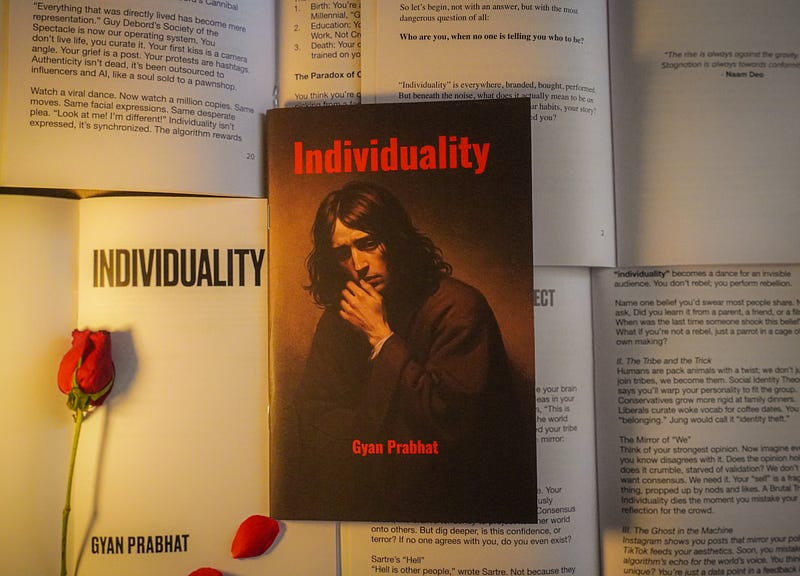
In Individuality, I examine the mechanics of independent thought. What shapes a person? What distorts them? At what point does conformity become intellectual surrender? The book is not about self-expression. It is about self-construction.

In Atlantis: Fact or Fiction?, I shift from the individual to civilization. Atlantis is not treated as fantasy, but as a lens. Whether myth or memory, it exposes how societies rise, decay, and mythologize themselves. The book dissects narrative, archaeology, philosophy, and speculation without romanticism.
One text focuses inward. The other interrogates history.
Both are built for readers who prefer examination over acceptance.
End.